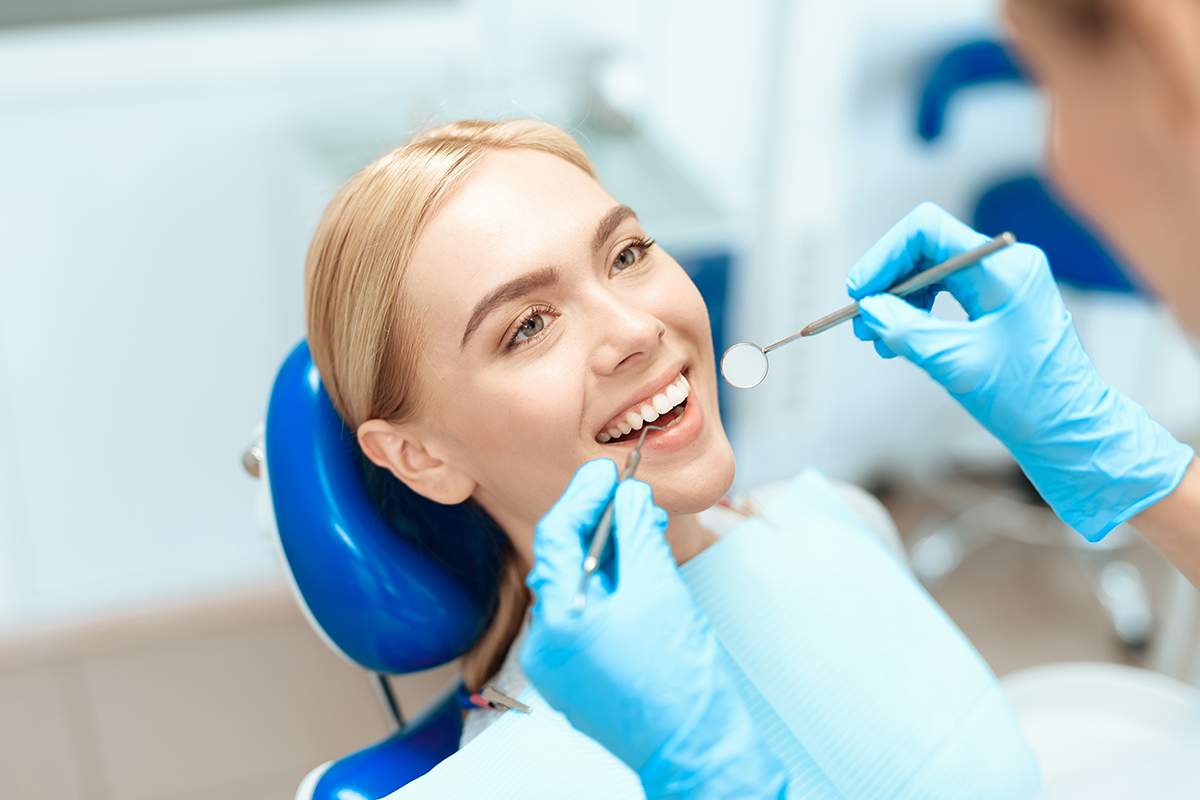
How Zoom! Works

The Zoom! in-office whitening system begins with a short preparation to cover your lips and gums, leaving only the teeth exposed.  The Zoom! clinician then applies the whitening gel, which is designed to be used with a specially designed light.  These two elements work together to gently penetrate your teeth, breaking up stains and discoloration.  With proper care your smile will sparkle for years.

Coupons
Cosmetic Dentistry
General Dentistry
ZoomNow.com

Exceptional Dentistry on YouTube Bellevue Dentist on Viddler

Do you have any questions? If so, please contact Exceptional Dentistry in Bellevue at (425)688-0197.


Veneers
Composite Bonding
Tooth Whitening
Customized Smile
Composite Fillings
Crowns
Bridges
Implants
Periodontics
Invisalign
Conscious Sedation


ClearCorrect is the clear and simple way to straighten your teeth without wearing braces so you can show off your smile! Looking for an alternative to braces? ClearCorrect is the clear and simple choice. No wires. No brackets. Just clear, convenient comfort—every reason to smile.


Neda Sayyah D.D.S.

Click here to learn more about Dr. Neda Sayyah >>

Click here to meet the Staff


Neda Sayyah, D.D.S.
Bellevue Family Dentist
2000 116th Ave. NE, Suite 2
Bellevue, WA 98004

Phone: 425.688.0197

Bellevue Office Directions >>


COSMETIC DENTISTRY USING MODERN TECHNOLOGY:

Dr. Neda Sayyah uses advanced cosmetic dentistry technology to create the ultimate smile for each of her patients. This modern dentistry equipment—which very few dentists have access to—allows her to achieve precise, flattering results with ease. Some of these unique tools include:

Intraoral cameras
Ever wonder what it is the dentist sees when she’s examining your mouth? Well, with our intraoral camera, you can find out! An intra-oral camera is a tiny, precise camera that fits into the mouth and takes digital photographs of the back teeth and gums, allowing patients to see just what the dentist sees. Being able to view cavities, decay, gum disease, and other dental problems helps patients make informed decisions about their dental work. To learn more about intra-oral cameras, please contact Exceptional Dentistry today!

ClearCorrect
ClearCorrect is the clear and simple way to straighten your teeth without wearing braces so you can show off your smile! Looking for an alternative to braces? ClearCorrect is the clear and simple choice. No wires. No brackets. Just clear, convenient comfort—every reason to smile.

With ClearCorrect, Dr. Sayyah can straighten your teeth using a series of clear, custom, removable aligners. Each aligner moves your teeth just a little bit at a time until you eventually get straight teeth. Take a look at this video to find out more!

COSMETIC DENTISTRY

In the past, dental work was often obvious and completed in bits and pieces, leaving patients with mouths full of unsightly silver fillings, ugly black gum lines, and teeth of various colors. But today’s cosmetic dentistry technology allows Dr. Sayyah to design sparkling, even smiles quickly, comfortably, and easily. With cosmetic options such as veneers, tooth whitening, and composite fillings, perfect teeth don’t have to be a dream! Here are some of the cosmetic dentistry procedures that we offer:

Veneers
In just two or three dental visits, a veneer can reverse years of stains caused by foods, caffeine and tobacco use. Special thin laminates, called veneers, can also be used to correct discolored, worn down, cracked and chipped teeth. Veneers can also be used to close unsightly gaps between teeth. Stronger types of veneers made of porcelain, also called composite veneers, typically last longer because they are bonded to the tooth.

An impression of the tooth must be made and a veneer molded by a lab technician. Because veneers require a small amount of enamel to be removed, they are permanent and non-reversible.

The process involves buffing the tooth, removing an extremely thin layer of the tooth to allow for the thickness of the veneer, an impression of the tooth, and final bonding of the veneer to the tooth with special cement. A special light is used to complete the process.

Composite Bonding
An alternative to veneers is a process called bonding, in which a tooth-colored material that looks like the enamel of your teeth is molded and shaped, and then hardened and polished. Bonding can be used to improve the color of a tooth, or close unsightly gaps.

Bonding is generally not as permanent a process as veneers, and can vulnerable to the same kind of staining your natural teeth are prone to. Bonding can also be more prone to chips and cracks than veneers.

Caps are generally preferred to bonding when such a procedure isn't deemed to be effective in the long run.

Back to Top >>

Tooth Whitening
People with stained or dull teeth usually benefit from whitening, which is a safe and effective way to brighten stained, discolored or dull teeth. Even a stubborn single tooth that is noticeably duller or less white than your other teeth can be individually brighten.

Teeth bleaching products, which contain peroxides, actually change your natural tooth color anywhere from five to seven -- but even up to twelve -- shades brighter.

One process known as chairside bleaching involves applying either a protective gel to your gums or a rubber shield to protect the soft tissues in the mouth. A bleaching agent is then applied to the teeth, and a special light is used to enhance the chemical action.

If your teeth aren't very dark or very stained, you may need only one bleaching session. Tooth bleaching safely lightens the color of your teeth, and can last up to five years.

In general, bleaching works for most people. Tooth bleaching is most effective if your teeth are darkened from age, coffee, tea or smoking. Teeth darkened with the color of yellow, brown or orange respond better to lightening. Other types of gray stains caused by fluorosis, smoking or tetracycline can be lightened, but with less-than-satisfactory results.

If you're interested in brightening your smile, have your teeth evaluated by us. Not everyone is a good candidate for bleaching. In some cases of serious discoloration and pitted teeth, for example, veneers may be more appropriate than bleaching. Moreoever, crowns, bridges, and fillings do not bleach, so it may be necessary to replace dental work to make it blend with the new color of your bleached teeth. An X-ray of your teeth may be the only accurate way of making a true assessment.

We use Zoom!® teeth whitening treatment offering the most exciting techniques in cosmetic dentistry. While Zoom!® is our premier teeth whitening procedure, we also offer at-home or in-office bleaching.

to Top >>

Composite Fillings
There are alternative, natural-looking materials to conventional silver-colored fillings – materials made from porcelain and composite resins, which are colored to match natural tooth enamel. Unfortunately, few materials can match the strength and durability of dental amalgam and such, may need more frequent replacement. Common amalgam alternatives include: Composite fillings -- As stated, composite fillings are just what the name implies: a mixture of resins and fine particles designed to mimic the color of natural teeth. While not as strong as dental amalgam, composite fillings provide a pleasing aesthetic alternative. Sometimes, composite resins need to be cemented, or bonded to a tooth to allow for better adhesion. Ionomers -- Like composite resins, these materials are tooth-colored. Ionomers are made from a combination of various materials, including ground glass and acrylic resins. Ionomers are typically used for fillings near the gum line or tooth root, where biting pressure is not a factor. They are more fragile than dental amalgam, however. A small amount of fluoride is released by these compounds in order to facilitate strengthened enamel in the affected area. Porcelain (ceramic) -- This material is usually a combination of porcelain, glass powder and ceramic. Candidates for porcelain fillings are typically crowns, veneers and onlays and inlays. Unlike ionomers, porcelain fillings are more durable but can become fractured if exposed to prolonged biting pressures.

Crowns
If you are reluctant to smile because of yellowed, injured, cracked, or chipped teeth, you may want to consider crowns. Crowns are synthetic caps, usually made of a material like porcelain, placed on the top of a tooth.

Crowns are typically used to restore a tooth’s function and appearance following a restorative procedure such as a root canal. When decay in a tooth has become so advanced that large portions of the tooth must be removed, crowns are often used to restore the tooth.

Crowns are also used to attach bridges, cover implants, prevent a cracked tooth from becoming worse, or an existing filling is in jeopardy of becoming loose or dislocated. Crowns also serve a cosmetic use, and are applied when a discolored or stained tooth needs to be restored to its natural appearance.

Procedures

A tooth must usually be reduced in size to accommodate a crown. A cast is made of the existing tooth and an impression is made. The impression is sent to a special lab, which manufactures a custom-designed crown. In some cases, a temporary crown is applied until the permanent crown is ready. Permanent crowns are cemented in place.

Bridges
Bridges are natural-looking dental appliances that can replace a section of missing teeth. Because they are custom-made, bridges are barely noticeable and can restore the natural contour of your teeth as well as the proper bite relationship between upper and lower teeth.

Bridges are sometimes referred to as fixed partial dentures, because they are semi-permanent and are bonded to existing teeth or implants. Some bridges are removable and can be cleaned by the wearer; others need to be removed by your dentist.

Porcelain, gold alloys or combinations of materials are usually used to make bridge appliances. Bridges can correct speaking problems, making chewing easier, and provide added comfort. To learn more about bridges, please contact us today.

Appliances called “implant bridges” are attached to an area below the gum tissue, or the bone.


Back to Top >>

Implants
Are you tired of or avoiding dentures? Are you finding that bridges aren’t right for you? Are you looking for a permanent method of tooth replacement? If so, dental implants may be the answer. Before development of dental implants, dentures were the only alternative to replacing a missing tooth or teeth. Implants are synthetic structures that are placed in the area of the tooth normally occupied by the root. Implants are anchored to the jawbone or metal framework on the bone and act as a foundation for an artificial tooth or permanent bridge. In some cases, implants can be used to attach dentures.

Not everyone is a candidate for a dental implant. For a successful implant to take hold, a candidate must have proper bone density and have a strong immune system. Diabetics and people with chronic bruxism (teeth clenching) are generally not favorable candidates. In all cases, dental implants require strict oral hygiene.

Implants are so well-designed, they mimic the look and feel of natural teeth. Implants are usually made of a synthetic yet biocompatible material like metal or ceramic.

In general, good candidates who have dental implants can expect high success rates with the procedure.

The procedure can take several visits. During the first visit, an anchor is placed into the jawbone and the site is allowed to heal for several weeks or months. This gives your tissue time to grow around the anchor to more firmly hold it in place.

During a follow-up visit, an artificial, natural-looking tooth is fitted over the implanted anchor.

Periodontics
Marked by tender, bleeding, or swollen gums, periodontal (gum) disease is a very real threat to many adult Americans. The disease is caused by plaque and tartar build-up on the teeth, which eventually weakens the fibers that bond gums to the teeth. The first stage, called gingivitis, is reversible if treated. Left untreated, it can progress, eventually leading to serious oral health problems such as tooth decay and loss. If you have periodontal disease, Dr. Sayyah can help by removing diseased tissue and treating infected gums. For more information about our periodontal options, please contact us today.

Conscious Sedation
If the thought of going to the dentist conjures up scary images of drills, pliers, and needles, you may want to consider conscious sedation. Conscious sedation is a safe, effective treatment used to help anxious patients relax so that they can get the dental care they need. Patients are always carefully monitored during treatment, ensuring the highest standards of safety. To find out more about conscious sedation, please contact our practice today.

Back to Top >>


Cosmetic Dentistry | Smile Gallery | Doctor | Practice | Contact Us
Copyright © 2005 Exceptional Cosmetic and General Dentistry - Neda Sayyah D.D.S.